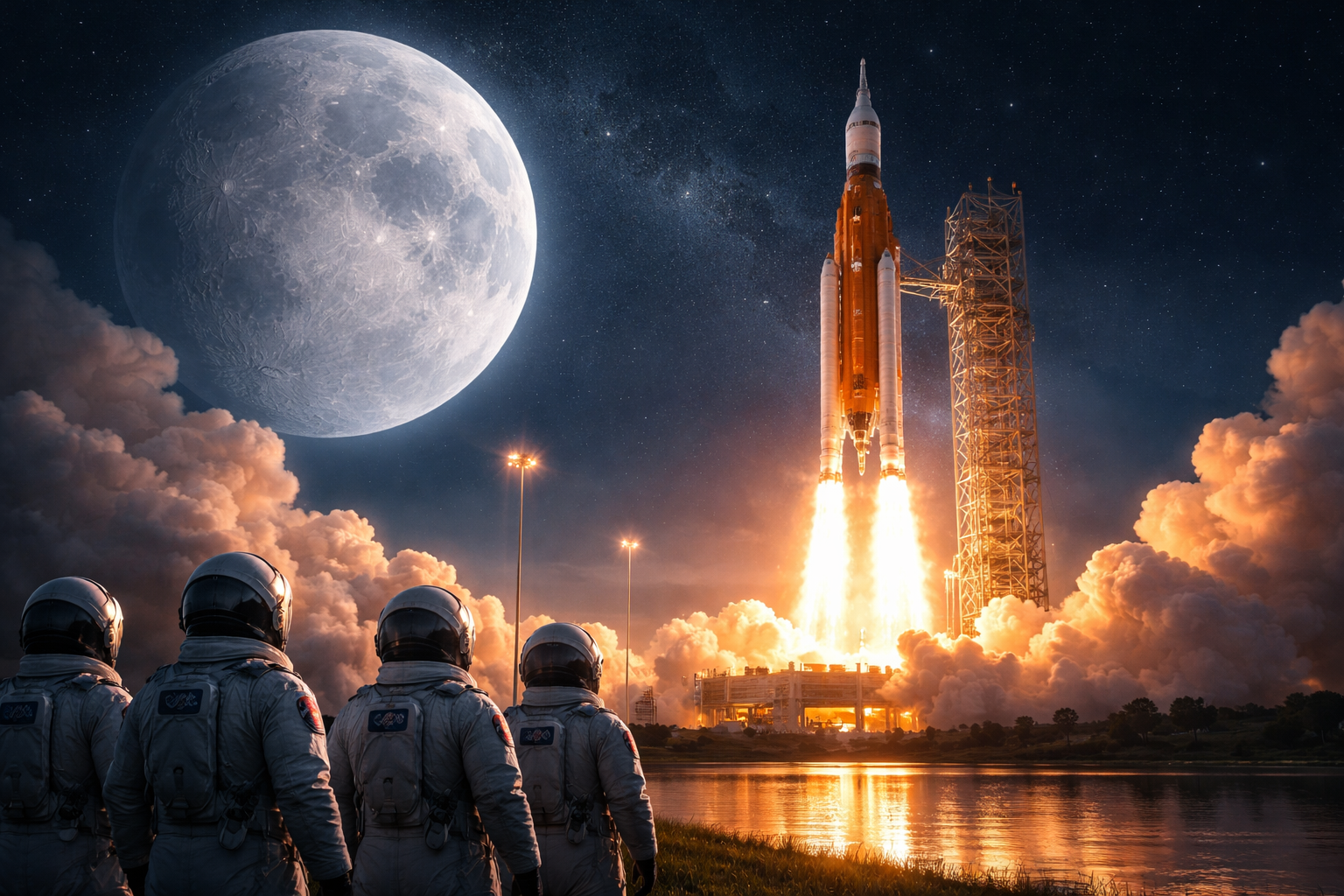
The NASA Artemis II moon mission isn’t just another space headline—it’s the moment humanity steps back into deep space after more than five decades. With a diverse crew, cutting-edge spacecraft, and global attention, this mission blends legacy with ambition. It’s not about revisiting the moon—it’s about preparing to live, work, and explore beyond it.
What makes the NASA Artemis II moon mission historic?
The NASA Artemis II moon mission is historic because it marks the first crewed journey beyond low Earth orbit since 1972, introduces a diverse astronaut team breaking multiple records, and serves as a critical test for future lunar landings under NASA’s Artemis program.
I still remember reading about Apollo missions in textbooks. They felt distant. Almost myth-like. But the NASA Artemis II moon mission changes that. It brings space exploration back into our present, not as nostalgia—but as a next step.
Why is this mission different from Apollo?
The NASA Artemis II moon mission isn’t just a repeat. It’s a reset. Technology has changed. Goals have evolved. And the world watching is far more connected than ever.
- The mission travels farther than Apollo missions
It pushes about 4,700 miles beyond the moon’s far side. That’s deeper into space than any human has gone in decades. This adds a new layer of risk, but also unmatched scientific opportunity.
- It focuses on testing, not landing
Unlike Apollo 11, this isn’t about planting flags. It’s about validating systems. Life support, navigation, communication—everything must work flawlessly before humans step on the moon again.
- It uses modern spacecraft
The Orion spacecraft, named Integrity, represents decades of engineering progress. It’s built for long-duration deep space missions, not short lunar visits.
- It reflects global collaboration
For the first time, the NASA Artemis II moon mission includes an international astronaut. This signals a shift from national pride to global participation.
- It sets up future missions
Without Artemis II, Artemis III cannot happen. This mission is the bridge. The rehearsal before the real performance.
Who are the astronauts on the NASA Artemis II moon mission?
The NASA Artemis II moon mission crew includes Reid Wiseman, Victor Glover, Christina Koch, and Jeremy Hansen, each representing historic milestones in diversity, experience, and global collaboration.
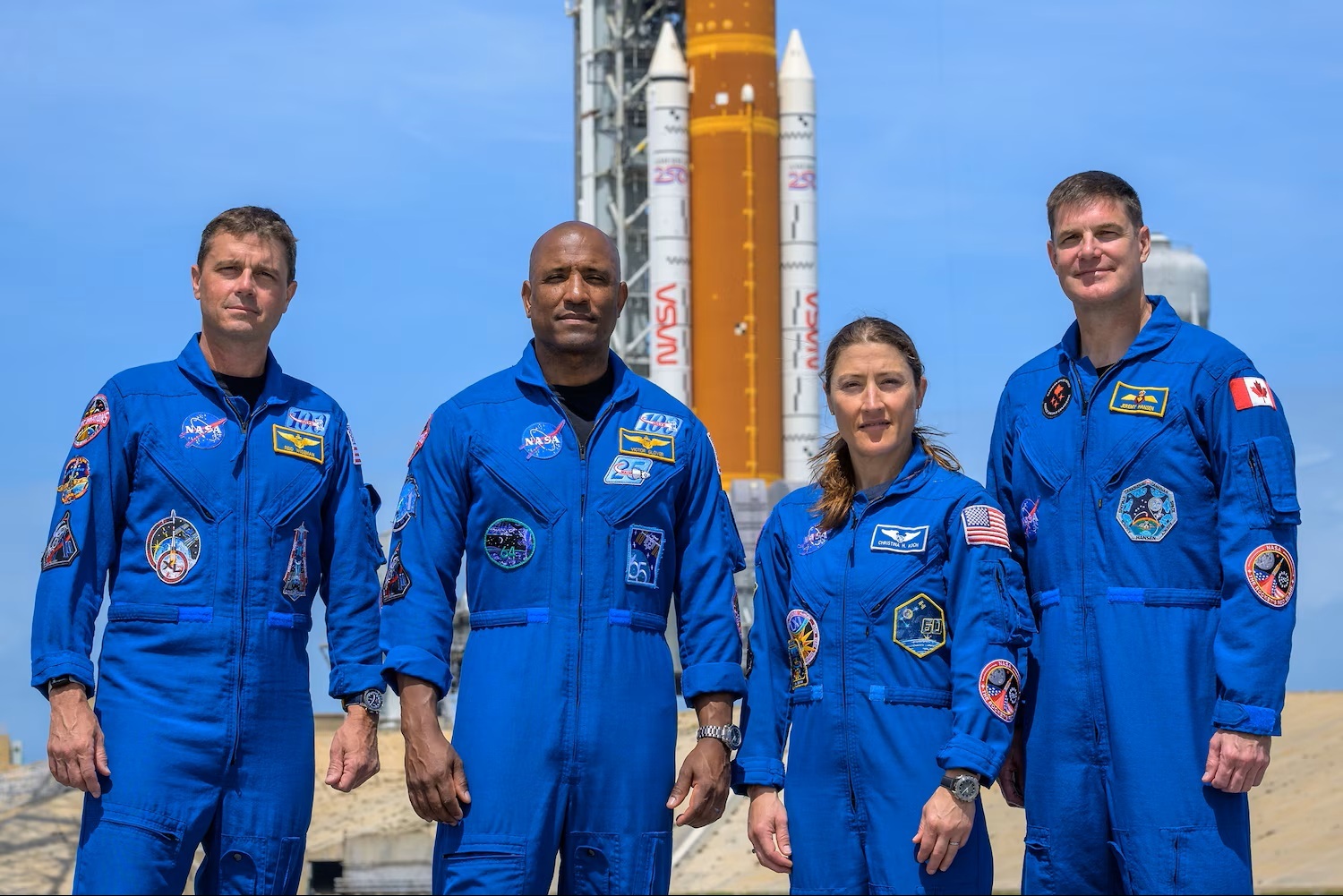
Source: NASA
When I looked at this crew lineup, one thing stood out—this isn’t just a team. It’s a statement.
What makes this crew a “crew of firsts”?
The NASA Artemis II moon mission doesn’t just push boundaries in space. It breaks them on Earth too.
- Jeremy Hansen represents global inclusion
A Canadian astronaut flying beyond Earth orbit for the first time. That’s not just a milestone for Canada. It’s a message to the world.
- Victor Glover makes history
He will become the first Black astronaut to travel beyond low Earth orbit. Representation matters. Especially in space.
- Christina Koch breaks another barrier
She will be the first woman to venture into deep space. A moment decades in the making.
- Reid Wiseman leads with experience
As commander, his role is critical. His past missions and calm leadership anchor the team.
- Diverse expertise strengthens mission success
From engineering to piloting, each astronaut brings unique strengths. This diversity improves decision-making under pressure.
How will the NASA Artemis II moon mission unfold?
The NASA Artemis II moon mission will launch aboard the Space Launch System from Kennedy Space Center, complete a 10-day journey including a lunar flyby, and test key systems before safely returning to Earth.
There’s something intense about countdowns. Even reading about them gives a rush.
What happens during the mission timeline?
The NASA Artemis II moon mission is carefully planned, but space rarely follows scripts perfectly.
- Launch from Kennedy Space Center
The two-hour window opens at 6:24 p.m. EDT. Weather conditions show an 80% chance of success—good, but never guaranteed.
- Powered by the Space Launch System
This rocket isn’t just powerful—it’s massive. Built to carry humans farther than ever before.
- Orion spacecraft enters deep space
Once in orbit, Orion begins its journey toward the moon. Systems are monitored constantly.
- High-altitude lunar flyby
Instead of landing, the spacecraft loops around the moon. The crew will witness regions humans haven’t seen up close in decades.
- Return and re-entry
After about 10 days, Orion re-enters Earth’s atmosphere at high speed. Heat shields and navigation systems are put to the ultimate test.
Why is the NASA Artemis II moon mission critical for future lunar landings?
The NASA Artemis II moon mission is essential because it validates life-support systems, communication reliability, and deep space navigation—key requirements for safely landing humans on the moon in upcoming missions like Artemis III.
I’ve learned something from projects—big goals fail without proper testing. Space missions are no different.
What systems are being tested?
This mission is less about spectacle and more about survival.
- Life-support systems
Astronauts rely on these systems every second. Oxygen, temperature, waste management—failure is not an option.
- Deep space communication
Signals must travel vast distances without delay or distortion. This mission tests reliability under real conditions.
- Navigation precision
In deep space, even small errors can be catastrophic. Artemis II ensures pinpoint accuracy.
- Heat shield performance
Re-entry generates extreme temperatures. Testing this ensures astronauts can return safely.
- Human endurance
Ten days in deep space isn’t trivial. This mission studies physical and mental effects on astronauts.
What challenges delayed the NASA Artemis II moon mission?
The NASA Artemis II moon mission faced delays due to technical issues, including a helium system problem in the rocket’s upper stage, highlighting the complexity and precision required for deep space missions.
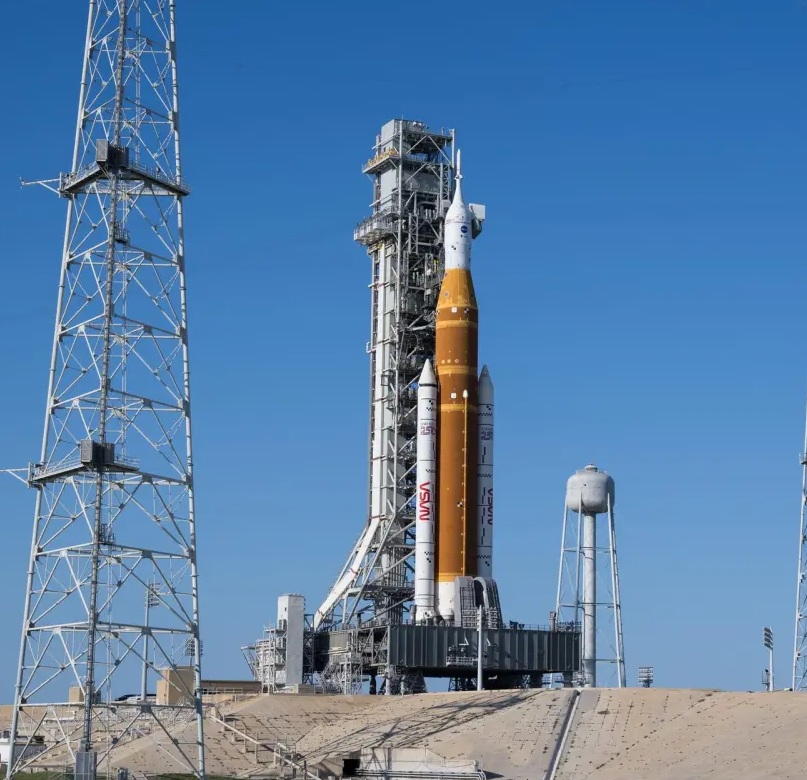
Source: SpaceNews
Delays frustrate people. But in space? Delays save lives.
What caused the setbacks?
Every delay tells a story—and teaches a lesson.
- Helium system malfunction
A critical issue forced engineers to pause and reassess. Safety came first.
- Rocket rollback
The spacecraft had to be moved back for repairs. Not ideal, but necessary.
- Timeline shift from March to April
This gave teams time to fix issues properly instead of rushing.
- Strict safety protocols
NASA doesn’t gamble. Every component undergoes repeated checks.
- Backup launch windows
Even now, alternate dates exist. Flexibility is built into the mission.
How does the NASA Artemis II moon mission reshape global space exploration?
The NASA Artemis II moon mission signals a new era of international cooperation, technological advancement, and renewed human ambition to explore beyond Earth, paving the way for sustainable lunar presence and future Mars missions.
This is bigger than NASA. Much bigger.
What does this mission mean for the future?
The NASA Artemis II moon mission is a turning point.
- International collaboration expands
With Canada onboard, more nations will likely join future missions.
- Inspires next generation
Kids watching today may become astronauts tomorrow. That ripple effect matters.
- Advances technology
Every mission leads to innovation—often spilling into everyday life.
- Prepares for Mars missions
The moon is just step one. Mars is the long-term goal.
- Reignites public interest
Space is exciting again. And that excitement fuels funding, research, and ambition.
Final Thought: Are We Ready for the Next Giant Leap?
When I think about the NASA Artemis II moon mission, I don’t just see a rocket launch. I see a question.
We’ve been here before. Sort of. But this time feels different. More inclusive. More ambitious. More human.
So here’s the real question — If this mission succeeds, are we finally ready to stay on the moon… or even go beyond?
Keep your eyes on Trending Eyes for real-time insights and analysis.