


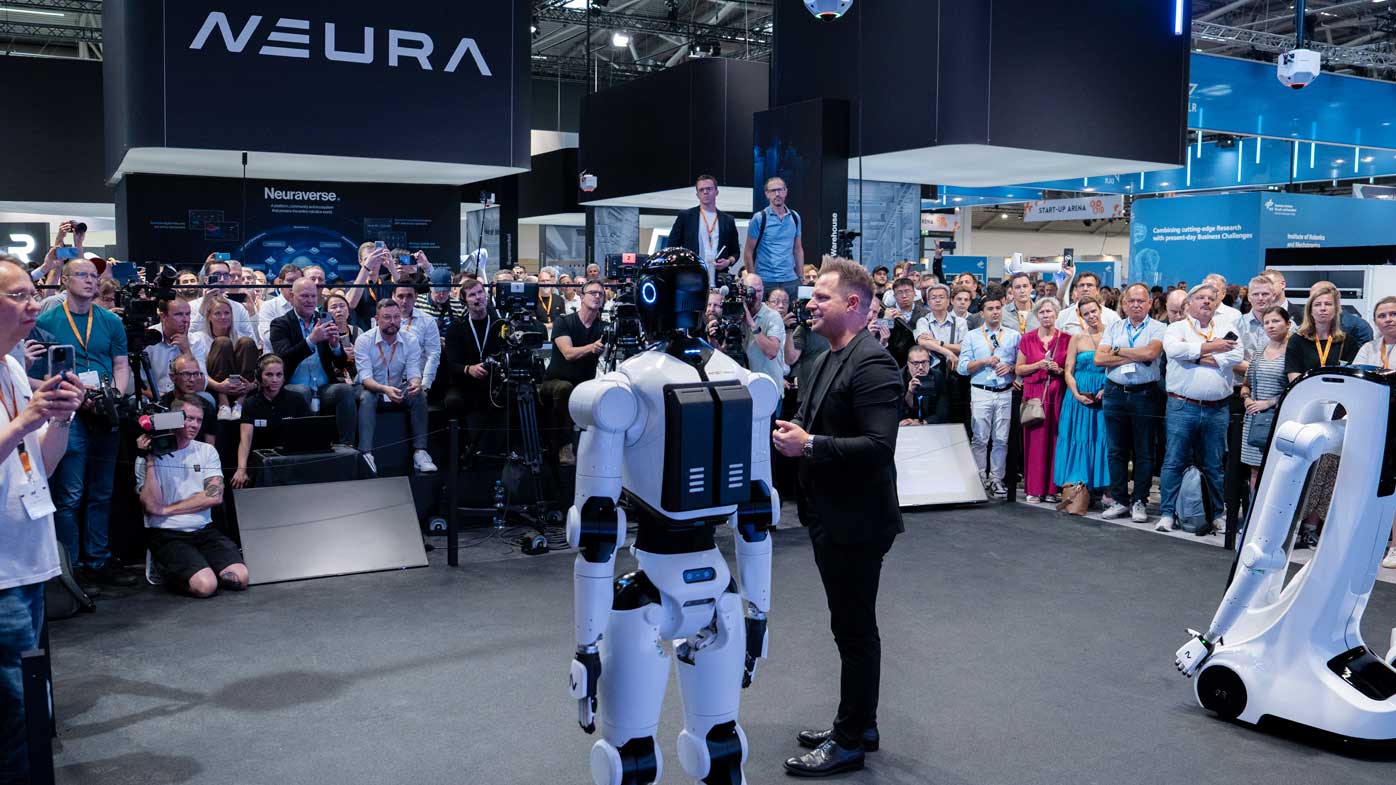

When the doors of CES 2026 open in Las Vegas this week, the spotlight won’t just be on flashy gadgets or futuristic TVs. Instead, it’s the quiet, confident march of Chinese humanoid robot commercialization that’s turning heads.
Unlike previous years, where humanoid robots were mostly proof-of-concept curiosities, CES 2026 feels different. This time, China isn’t showcasing ideas. It’s showcasing inventory, production lines, and near-term deployment plans.
A Record-Breaking Presence Signals a Strategic Shift
Chinese companies are arriving at CES 2026 in force. Out of roughly 4,300 total exhibitors, 942 are from China, making it the second-largest national presence after the US. Within robotics alone, 149 Chinese firms account for nearly one-quarter of all robotics exhibitors, a staggering figure that underlines how seriously Beijing is backing Chinese humanoid robot commercialization.
What’s striking is who these companies are. Well-known names like Unitree Robotics, AgiBot, Galbot, Engine AI, Noetix Robotics, and state-backed X-Humanoid are not pitching distant futures. They’re pitching delivery timelines.
This aligns directly with China’s industrial roadmap, which officially marked 2025 as the first year of humanoid robot commercialization, backed by tax incentives, national investment funds, and policy-level coordination.
From Lab Prototypes to Factory Floors
The biggest narrative shift at CES 2026 is scale.
Shanghai-based AgiBot quietly crossed a milestone in December: its 5,000th general-purpose humanoid robot rolled off the production line, less than three years after the company was founded in February 2023. In an industry where competitors often celebrate a dozen working units, this was a loud signal.
This is the core of Chinese humanoid robot commercialization, manufacturing readiness. Chinese exhibitors are presenting robots designed for manufacturing lines, warehouses, and service roles, not science demos.
Think robotic workers moving components in electronics factories, assisting logistics hubs during labor shortages, or operating in hazardous industrial environments where human risk is high.
Market Momentum Backed by Hard Numbers
Analysts say this isn’t hype, it’s momentum.
According to Morgan Stanley analyst Zhong Sheng, China’s humanoid robot shipments could reach 14,000 units in 2026, with annual output expected to double in the following years. In just the second half of 2025, cumulative announced orders from Chinese manufacturers exceeded 2 billion yuan.
China’s National Development and Reform Commission projects the embodied intelligence industry, a category that includes humanoid robotics, to grow 50% annually, reaching 100 billion yuan by 2030.
These numbers explain why Chinese humanoid robot commercialization is accelerating faster than global peers expected.
Global Rivals Feel the Pressure
China’s rise doesn’t go unchallenged.
At CES 2026, Boston Dynamics is unveiling the newest version of its Atlas humanoid robot, marking its public debut. Parent company Hyundai Motor Company is also set to reveal its broader AI robotics strategy.
Yet even here, the contrast is clear. Western firms are still emphasizing capability breakthroughs. Chinese firms are emphasizing cost efficiency, manufacturability, and deployment speed, three pillars critical to commercialization.
Morgan Stanley research highlights another advantage: patents. Over the past five years, China filed 7,705 humanoid-related patents, compared to 1,561 in the US.
This intellectual property edge reinforces China’s manufacturing ecosystem, giving its companies a head start in turning blueprints into products.
Why Cost and Scale Matter More Than Spectacle
One reason Chinese humanoid robot commercialization is advancing faster lies in cost structure. China’s vertically integrated supply chains, from actuators and sensors to AI chips, allow companies to reduce unit costs rapidly once production scales.
In practical terms, that means a factory robot that costs half as much and ships six months earlier can win contracts even if it’s slightly less advanced. For logistics firms, manufacturers, and service operators facing labor shortages, availability beats perfection.
Beyond CES: What Comes Next?
CES 2026 may be the showcase, but the real battleground is deployment.
Over the next 18 months, analysts expect Chinese humanoid robots to move into:
- Electronics and automotive factories
- Warehouse and fulfillment centers
- Controlled service environments like hotels and campuses
If shipment forecasts hold, Chinese humanoid robot commercialization could define global pricing benchmarks, forcing competitors worldwide to rethink both strategy and speed.
Conclusion: A Turning Point for Humanoid Robotics
CES 2026 feels like a line in the sand. China isn’t asking whether humanoid robots will be commercialized, it’s demonstrating how fast and how cheaply it can be done.
With policy backing, manufacturing depth, and accelerating investment, Chinese humanoid robot commercialization is shifting the global robotics conversation from what’s possible to what’s deployable. And once that shift happens, the market rarely looks back.
Keep your eyes on Trending Eyes for real-time insights and analysis.